


Testimonials
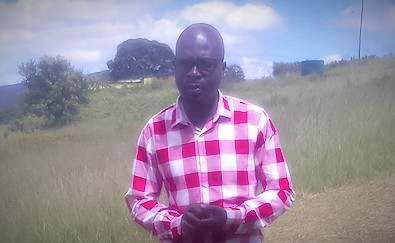
Meet Celumusa Dladla!
Meet Celumusa Dladla:
Advancing Math and Science Education in Eswatini
We’re excited to spotlight Celumusa Dladla, a secondary school teacher from Eswatini, where he teaches science and ICT (computer science) to students between the ages of 11 and 20. He's currently enrolled in NJCTL's program for middle school teachers--part of a national initiative by the Ministry of Education and Training (MoET) which is reaching 150 educators across the country.
Located in southern Africa, Eswatini is known for its picturesque landscape and rich culture. Its education system is undergoing a period of focused development, especially in the areas of mathematics and science.
NJCTL's project in Eswatini builds on our prior work in The Gambia, Lesotho, Nigeria, and Malawi, aiming to support teachers in making learning more interactive, student-centered, and accessible--regardless of location or resources.
Celumusa's commitment to teaching started early. "It was my passion from primary school where I loved teaching my peers," he says. "I really enjoy working with my current students and seeing what they end up doing after they leave my classroom. I am especially excited to see them go into the engineering fields."
He first heard about NJCTL through the MoET. "They wanted to improve education in Eswatini's middle schools," he explains. "Since we started with NJCTL, things have already started to improve."
Through NJCTL, Celumusa was introduced to a more collaborative, student-driven approach to teaching. "We've learned about social constructivism, where we group learners into small groups of four or five. They do peer teaching, and I've realized that they learn very easily from each other. It's much better than having the teacher do all the talking."
He uses mixed-ability groups to support all learners. "Gifted learners get bored when the material is repetitive, and they often distract the whole class. But when they work in groups and teach their peers, they stay engaged. And less gifted learners feel more comfortable learning from their classmates."
The impact extends to his home life, too. "My child told me, 'Daddy, I'm bored in class. I keep getting the same work.' I told his teacher to try what we are learning--group work, more interaction--and later, she called and said it was working. She was happier, and my child was happier!"
Resources and infrastructure can be a challenge in Eswatini, particularly when it comes to science labs. "We don't have many proper labs in my country, and the labs are not safe for students to work in. But NJCTL introduced us to virtual online simulations, which make it very easy for students to explore in a safe way."
Since studying with NJCTL, Celumusa is also rethinking the role of assessment. "We used to grade everything--homework, classwork--whether or not the learners understood the material. That wasn't helping. Now we are focusing on summative assessments to see if students have grasped the content. It's about finding where there are weaknesses and helping those who are behind."
Teaching in different school communities has also shaped his approach. "I am from an urban area, but now teach in a rural community. The cultures are not the same. Rural learners haven't had much exposure to technology, so you must understand their mindset. You must make them comfortable from the first day of your lesson. The way you introduce yourself matters--you make them feel safe, you call them by their names, and you get to know their parents. Once the student becomes comfortable with you, teaching becomes easier. You become a community member."
He hopes NJCTL's program will continue to expand. "Eswatini is divided into four regions, and we are now working with 150 teachers. We hope this program can go to all schools, so every teacher is working from the same foundation. NJCTL is helping us move forward--not just as teachers, but as a country."
We are proud to have Celumusa as part of the NJCTL community and can't wait to see how he continues to lead in his classroom and his country!
NJCTL offers free, editable teaching resources in science, mathematics, and computer science for teachers worldwide. Anyone, regardless of location, can enroll in our courses for teachers and students. All classes are 100% online, asynchronous, and self-paced.